
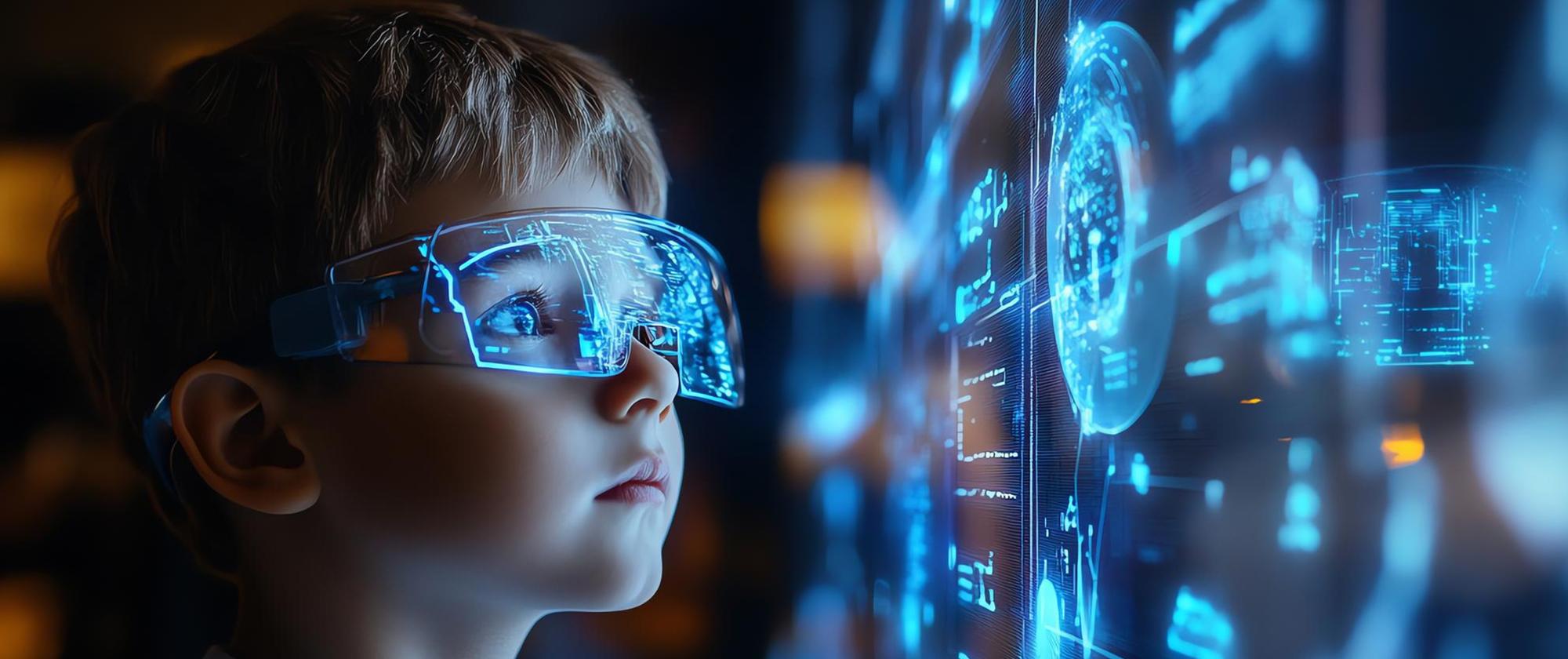
Future Careers Start Early: Why Students Should Learn AI and Robotics to Build Strong Skills for Tomorrow
Future Careers Start Early: Why Students Should Learn AI and Robotics to Build Strong Skills for Tomorrow
The world is changing faster than we think. Nowadays, technology is no longer limited to computer scientists or engineers. AI, robotics, automation and digital systems are now part of almost every industry. Preparing for the future means more than just traditional classroom learning. It needs developing practical skills, curiosity and confidence to work with technology. That’s why learning AI and robotics at an early stage has become so important. At STEM education in Malappuram, we believe that future careers start with early exposure to innovation, creativity and hands-on learning.
Why Starting Early Matters in Technology Education
Across manufacturing, healthcare, agriculture, logistics and even creative fields, robotics and intelligent systems are becoming part of daily operations. Companies are not looking for workers who can follow instructions from a manual. They need people who can think critically, troubleshoot complex problems, design solutions and work alongside machines. These are not skills you pick up in a week. They are built over years of hands-on practice, curiosity and iteration.
That is why starting early matters so much. A student who begins working with circuits, sensors and programming at age ten has years of experience by the time they reach higher education or the workforce. They have already made mistakes, fixed them and learned from them. That foundation is worth more than any certificate earned in a crash course.
Learning Skills That Go Beyond the Classroom
We hear a lot about career readiness, but that framing misses something important. Through our AI, Coding & Robotics Courses, when a student builds a robot from scratch, they are not just learning to wire components together. They are learning how to break a big problem into smaller pieces. They are learning patience when something does not work the first time. They are learning how to communicate an idea through a physical object that others can see and interact with.
These are thinking skills. Problem-solving skills. Collaboration skills. They transfer across every subject in school and every role a person might take on in their career, whether that turns out to be engineering, medicine, design, business or something that has not been invented yet. This is what drives the design of every program; we are building thinking habits.
Why Students Deserve This Opportunity
Access to quality STEM and technology education has historically been concentrated in a handful of cities. Students in smaller districts and towns often do not have access to robotics labs, 3D printers or programming courses until much later, if at all. That gap has real consequences. It shapes which students feel confident applying to technical courses, which ones explore entrepreneurship and which ones believe technology careers are for them.
The AI & Robotics institute in Malappuram, Kerala, was built to change that for students right here in Malappuram. When a ten-year-old in our Maker School holds up the working model they designed, printed and programmed themselves, something clicks. They stop seeing technology as something that happens in faraway places and start seeing themselves as someone who can make things.
What Hands-On Learning Actually Does to a Student
There is a real difference between a student who reads about how a motor works and a student who wires one up, watches it fail, figures out why and tries again. The second student owns that knowledge in a way the first one cannot. It lives in their fingers, not just in their notes.
Every program at Opsta, from our in-school robotics sessions to our weekend Maker School tracks, is designed around this principle. Students work with real tools. They face real challenges. They produce real outcomes they can show to their families, their schools and one day, to the world. That experience of completing something meaningful builds the kind of confidence that textbooks alone cannot give.
Final thoughts
Parents sometimes ask us whether their child is too young to start with robotics or whether they need to be good at science first. The answer to both is no. Our programs are designed to meet students where they are, from Grade 3 through to working professionals looking to upgrade their skills. The earlier a student starts, the more time they have to build on what they learn. The technologies shaping tomorrow's careers are not waiting for our students to catch up. But with the right environment, the right guidance and the right start, our students will not be catching up. They will be the ones setting the pace.